Why choose bonding for windows, roof hatches, doors and service hatches
Bonding windows, roof hatches, doors and service hatches offers several clear advantages compared to traditional fastening methods. A bonded connection distributes forces across a larger surface area. This prevents concentrated stress points that occur with screws. Especially in vehicles that are constantly exposed to movement, this makes a significant difference.
Bonding also helps prevent thermal bridges. There is no direct metal connection between the interior and exterior, which helps reduce condensation and contributes to better insulation. From an aesthetic perspective, bonding also offers advantages. No visible screws or covers are required, creating a clean and minimal appearance.
Which adhesive should be used for bonding windows, roof hatches, doors and service hatches?
For these applications, MS polymer adhesives are commonly used. These adhesives combine flexibility with strength. They remain elastic while curing into a durable bond. This makes them suitable for vehicles exposed to:
- Vibrations during driving
- Material movement caused by temperature differences
- Long-term exposure to moisture and UV radiation
Important characteristics include:
- Absorbing vibrations and movement
- Adhesion to aluminium, steel, composite materials and painted surfaces
- Suitable for long-term exterior applications
The final adhesive choice depends on the specific application, including material combinations, loads and environmental conditions. This decision always remains the responsibility of the installer.
Bonding versus screws with butyl sealant
An alternative to bonding is installation with screws combined with butyl sealant. Butyl remains flexible and non-hardening, making components easier to remove later. This can be beneficial for servicing or modifications. However, butyl also has limitations:
- More sensitive to ageing
- Higher risk of leaks over time
- Limited structural contribution
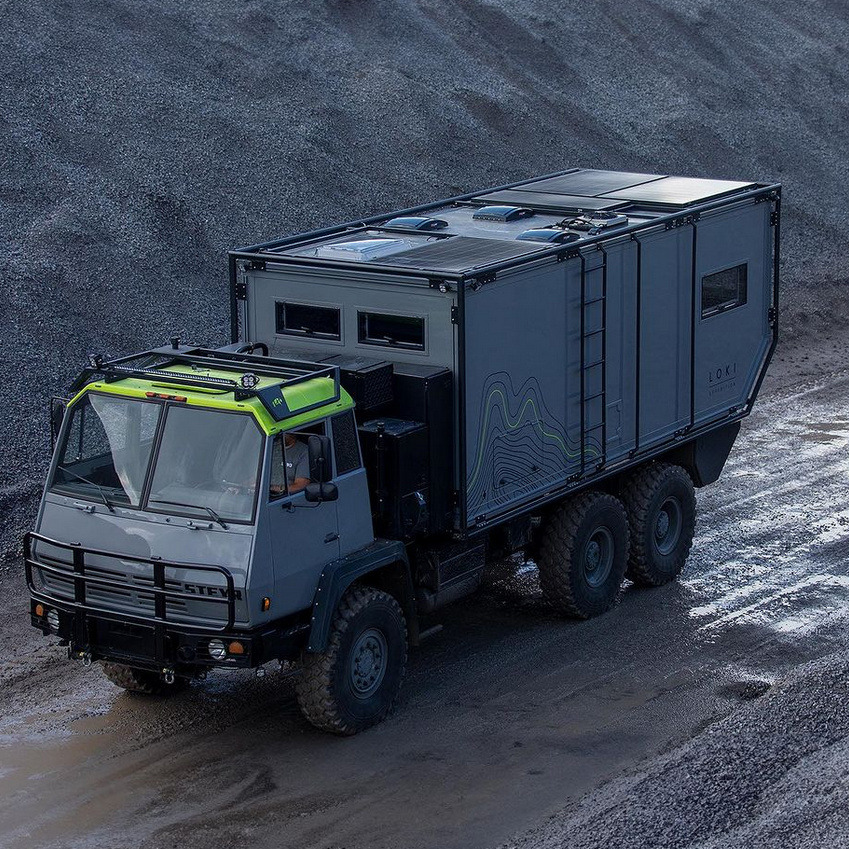
A bonded connection using a curing adhesive generally provides greater reliability when a permanent solution is required. In practice, bonding is therefore commonly used in high-quality expedition vehicles.
What determines a reliable bonded connection
In practice, a reliable bond depends on three factors: the surface, flexibility and adhesive layer thickness.
Surface preparation
The foundation of every bonded connection is proper surface preparation. The surface must be: Clean, dry and free from grease and contamination. In addition, coatings such as paint or protective layers must have proper adhesion to the base material. If the coating detaches, the adhesive bond will also fail.
Flexibility
Materials such as aluminium, steel and composites expand and contract under temperature changes, and not all materials move equally. A rigid connection cannot absorb these differences. This leads to stress and eventually causes cracks or detachment. A flexible adhesive prevents this problem and helps maintain a durable bond under changing conditions.
Adhesive layer thickness
The adhesive layer is often underestimated, but it is critical for a reliable bond. The adhesive must have enough thickness to absorb vibrations, material movement and thermal expansion. It is also important to maintain a continuous adhesive bead around the entire component to reduce the risk of leaks over time.
Large bonding surface through the flange
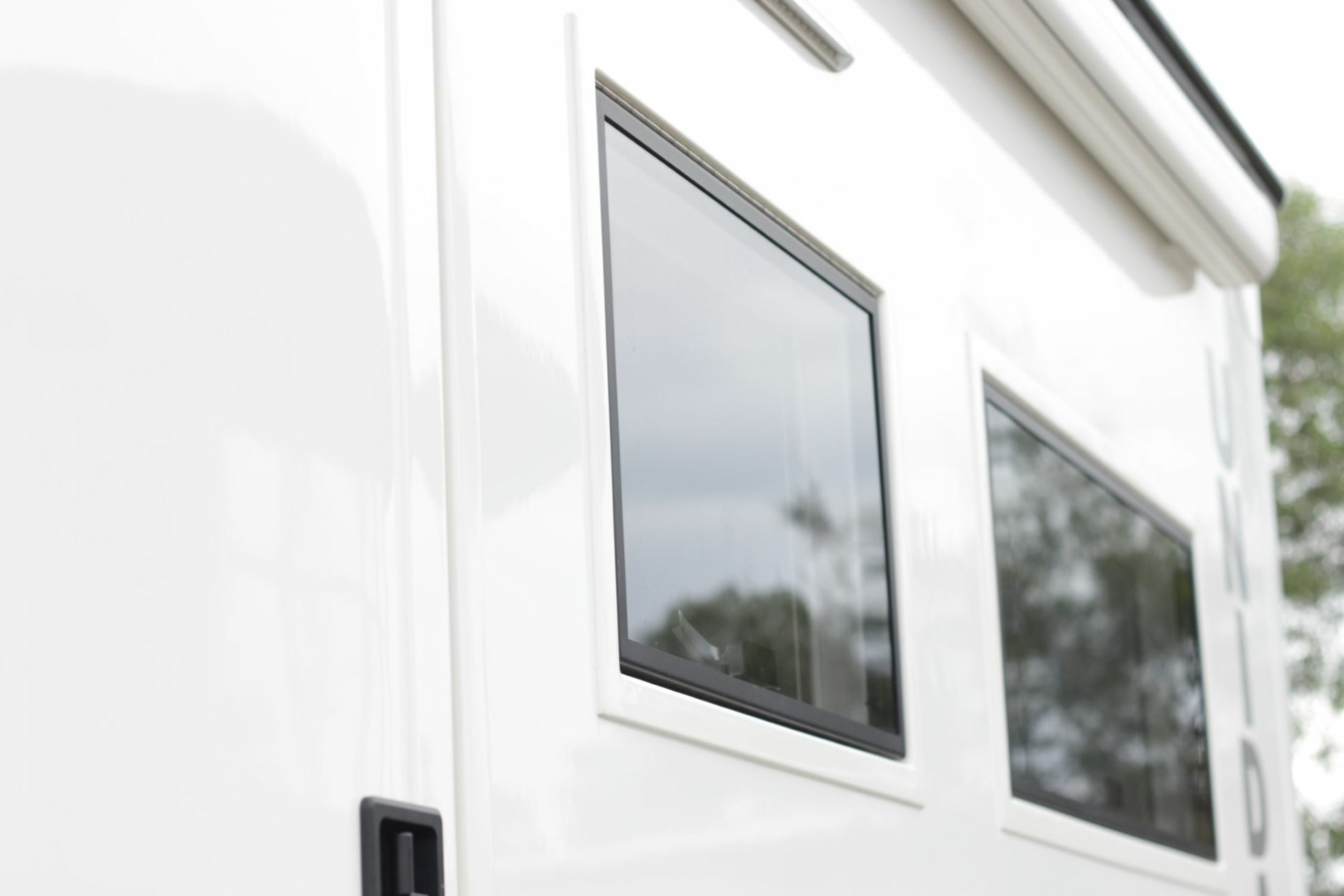
Our windows, roof hatches, doors and service hatches are equipped with a wide flange. This flange serves several purposes.
It covers the opening in the wall while simultaneously creating a large bonding surface. This makes the connection stronger and more reliable. Practical advantages include:
- Easier and more controlled installation
- Better distribution of forces
- Reduced risk of stress concentrations
- Lower risk of leaks
For vehicle builders, this means less dependence on exact tolerances and greater confidence in the final result.
Surface pre-treatment
Proper adhesion starts with correct preparation. This includes:
- Cleaning with a suitable degreaser
- Light sanding of the surface
- Removing dust and residue
- Applying primer when required
The correct pre-treatment depends on both the material and the adhesive type. Aluminium, steel and composite materials each require a different approach. Always follow the adhesive manufacturer’s instructions, as these are essential for achieving a reliable bond.
Installation in practice
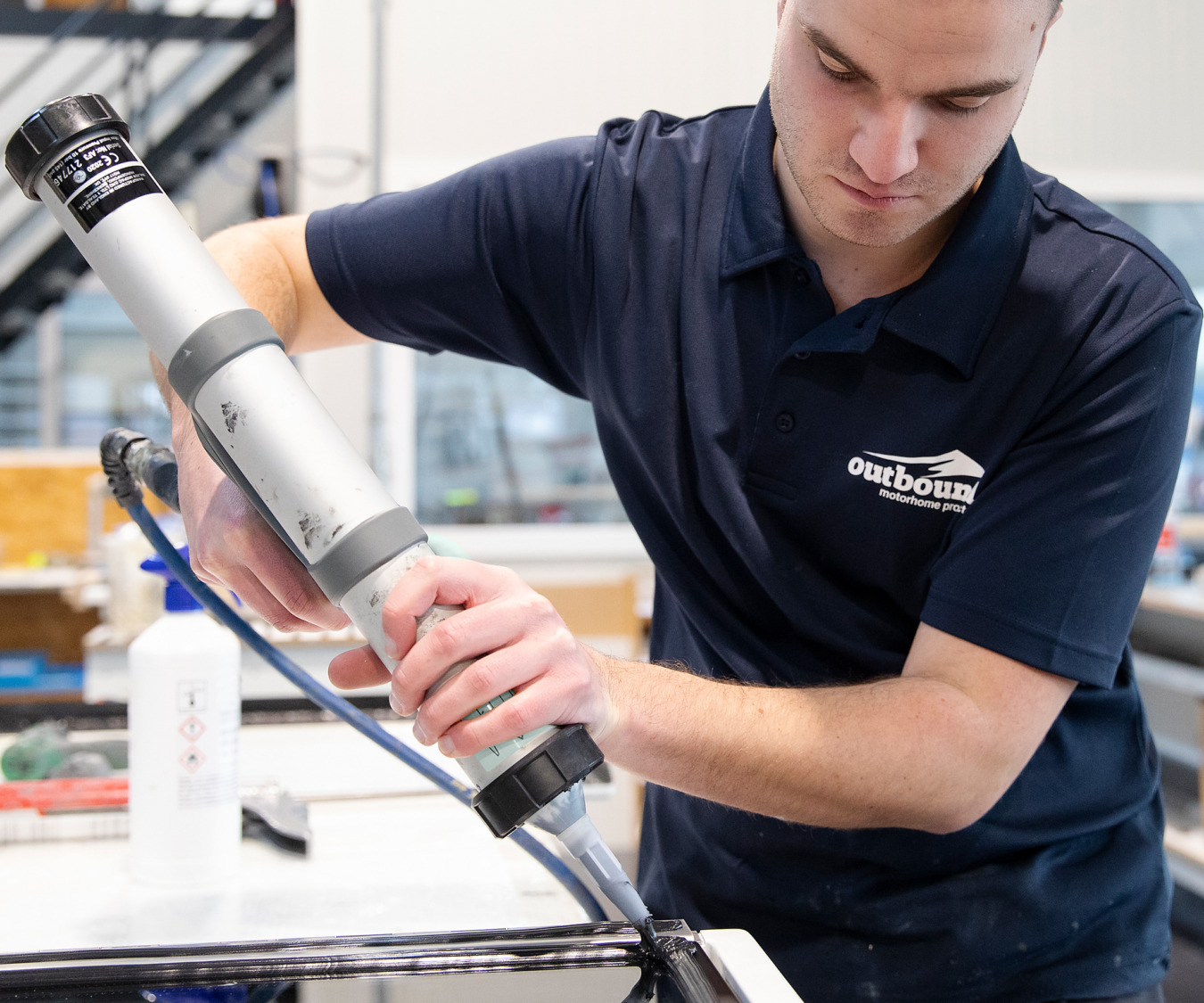
In practice, bonding requires a controlled and careful approach. Apply the adhesive evenly across the flange. Position the component without fully compressing the adhesive. If necessary, temporarily secure the component in place during curing. Pay close attention to working time and ambient temperature, as both directly affect processing and the final result.
Finishing the sealant joint
Flexible adhesives are generally not suitable for long-term paint finishing. Differences in flexibility can cause paint to crack over time. A common procedure is:
- Finish the wall completely first
- Install the component afterwards
- Finish with a visible UV-resistant sealant joint
This visible seal protects the adhesive and creates a clean final finish.
Durability and maintenance
A properly executed bonded connection requires very little maintenance. This is an important advantage during long journeys. Periodically inspect the joints for damage or ageing, especially after intensive use or exposure to extreme conditions. With the correct materials and proper application, a bonded connection can last for many years without intervention.
Important to know
Every application is different. Factors such as material selection, surface treatment, climate and installation methods all strongly influence the final result. Therefore, always:
- Follow the adhesive manufacturer’s guidelines
- Test the application beforehand
- Work carefully and cleanly
Responsibility for installation and the final result always lies with the installer. With the right approach, you create a connection you can rely on during every journey.
Want to know more?
- Windows for expedition vehicles: Double glazing vs. plastic
- The strength of fiberglass reinforced polyester
- Components for expedition vehicles
- Bonding windows, roof hatches, doors and service hatches for expedition vehicles
- Wall construction of expedition vehicles
- Temperature differences in expedition vehicles
Get inspired

Discover this Mercedes Rundhauber 911 Hybrid expedition vehicle
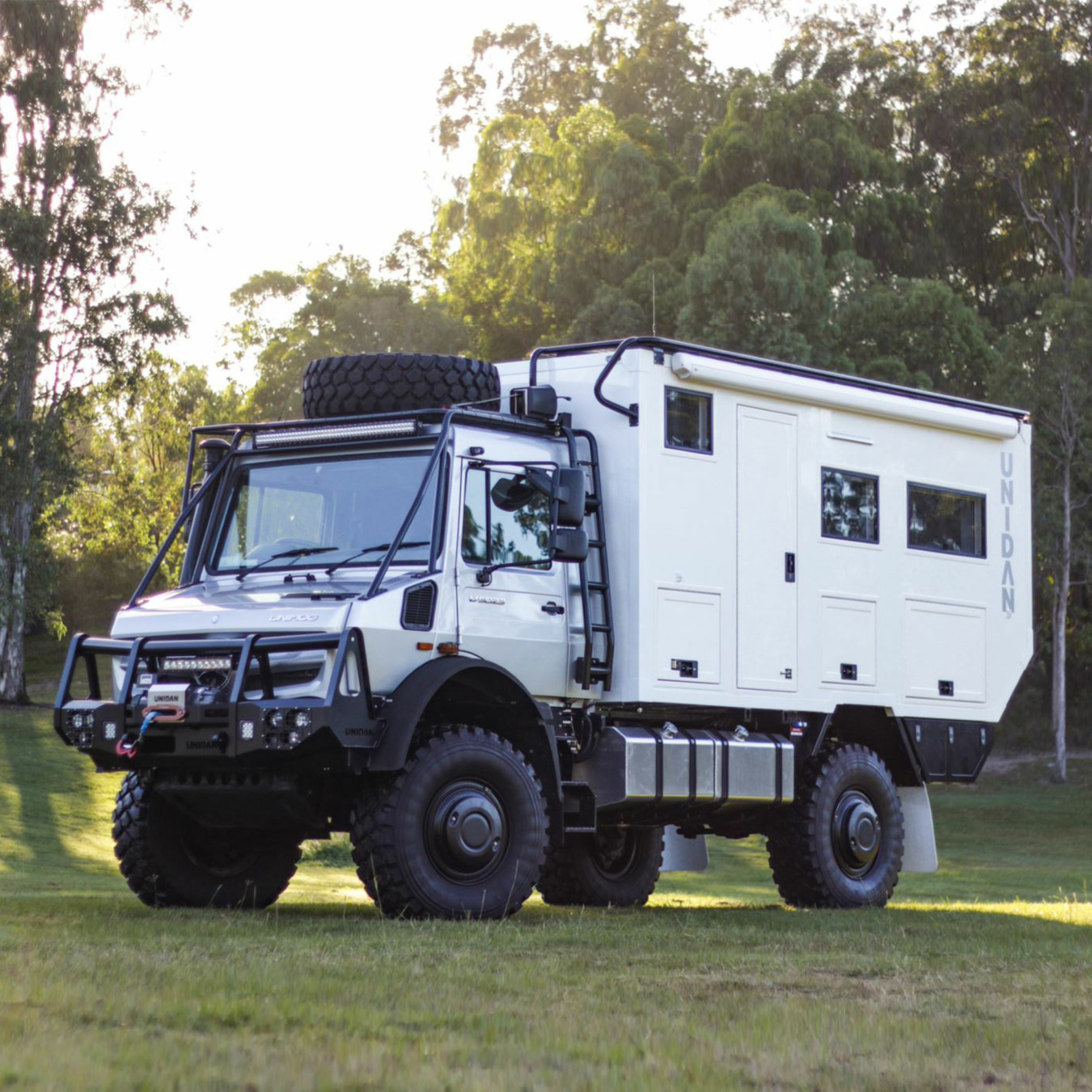
Discover this Mercedes Unimog Expedition vehicle by Unidan Engineering

Discover this Iveco Daily 4x4 Expedition Vehicle by Woelcke

Discover this Ford Transit 4x4 campervan by Pureflexx

Discover this Toyota Hilux Expedition vehicle by Truckhouse BCT