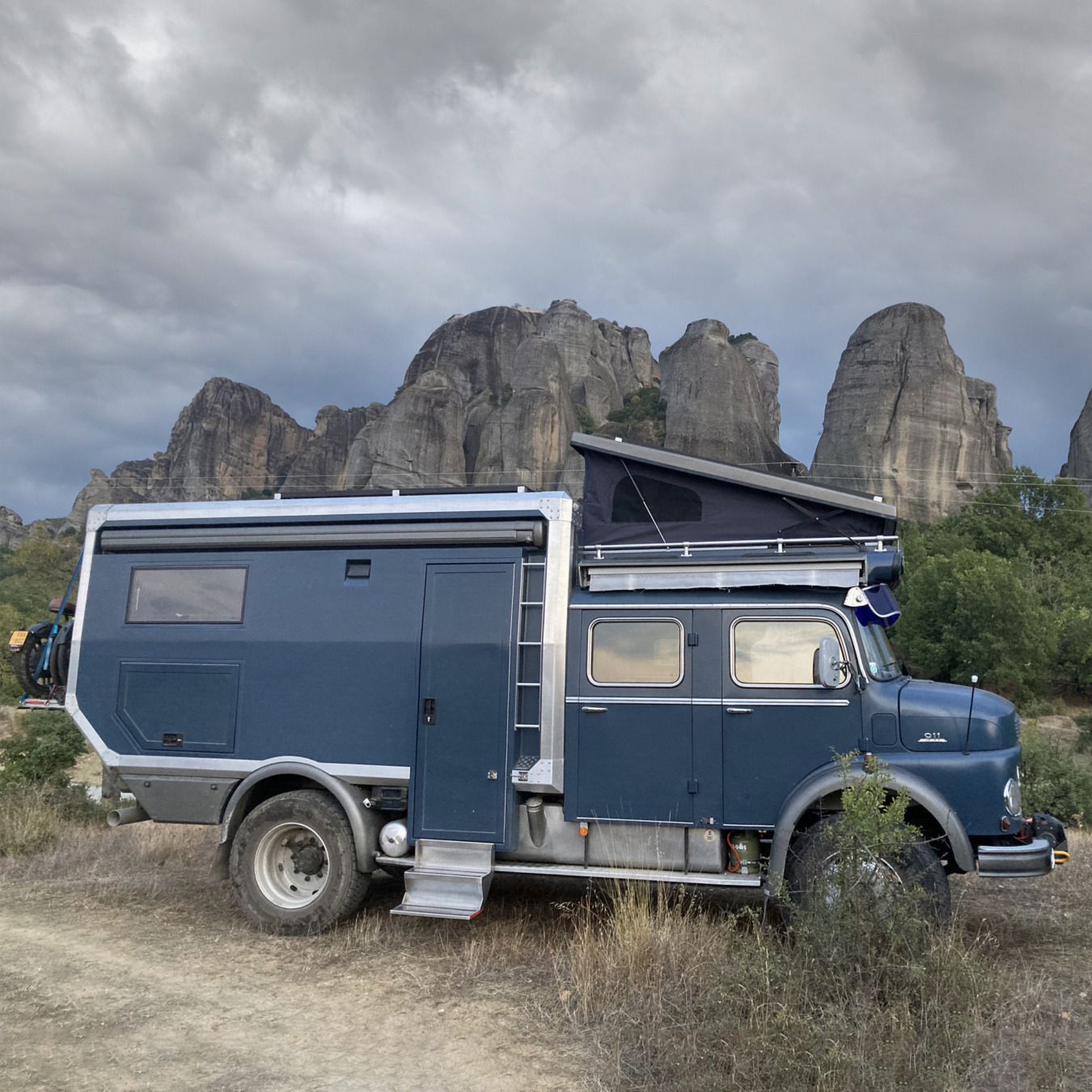
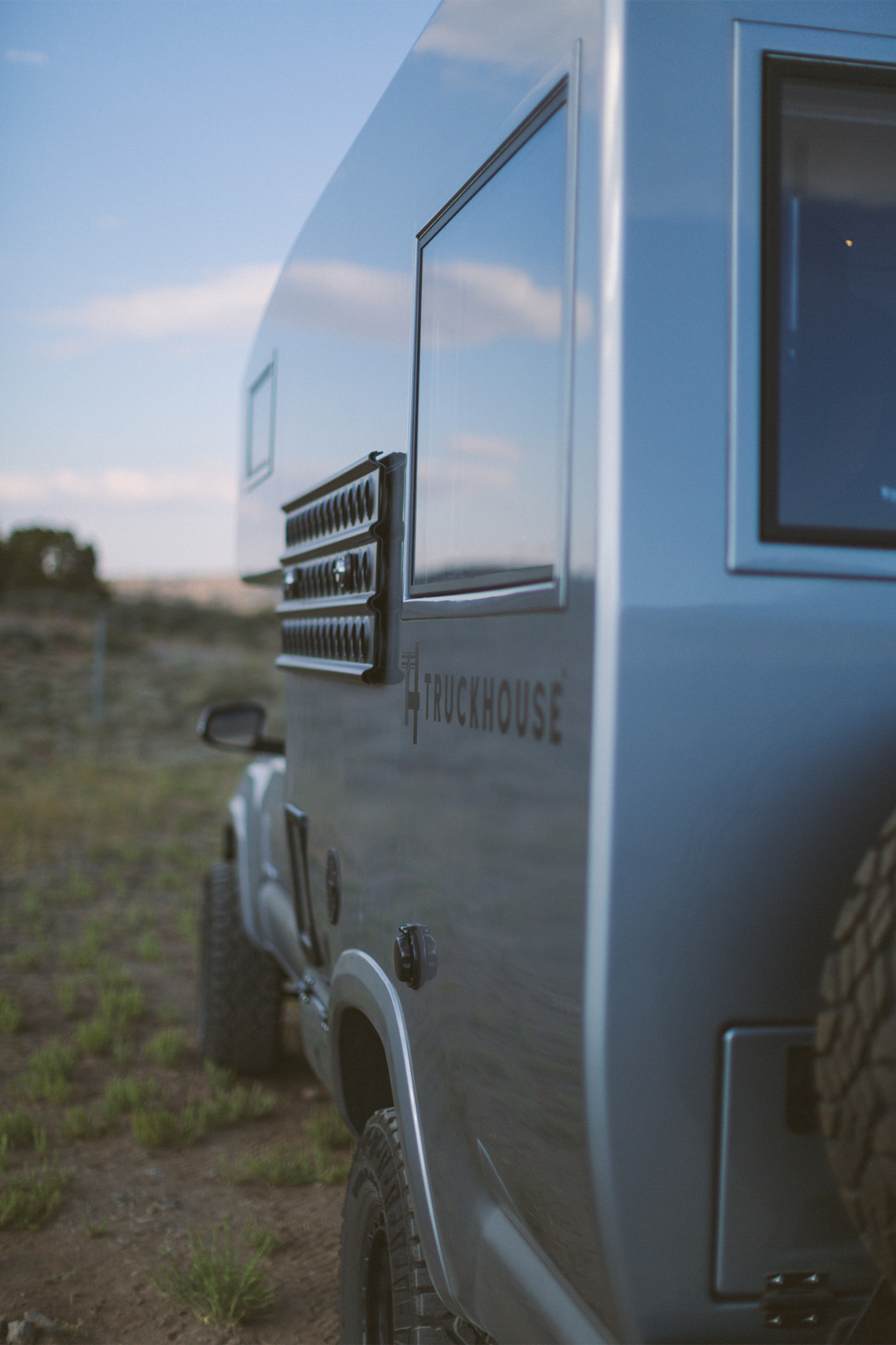
Why sandwich panels are used in expedition vehicles
Sandwich panels consist of an insulating core with strong outer layers on both sides. This construction creates a rigid structure while keeping weight relatively low. For expedition vehicles, this is important because the body must withstand:
- Vibrations during off-road driving
- Temperature differences between climates
- Moisture and condensation
- Long-term stress during travel
Fibreglass reinforced plastic, also known as GRP, is commonly used as the outer layer of these panels. The material is strong, dimensionally stable and highly resistant to moisture and weather conditions.
GRP also offers favourable thermal properties. It transfers heat less quickly than aluminium, helping to reduce thermal bridging.
Advantages of GRP sandwich panels
GRP sandwich panels are widely used in high-quality expedition vehicles because of their combination of strength, insulation and durability. Key advantages include:
- High strength with relatively low weight
- Resistant to moisture, corrosion and rot
- Good insulating properties
- Less sensitive to thermal expansion
- Suitable for bonded constructions
- Long service life under demanding conditions
In practice, this results in a stable wall construction that maintains its shape even after years of intensive use.
Why aluminium is less suitable for wall construction
Aluminium is regularly used in vehicle construction because of its low weight. However, it has clear disadvantages when used as a full wall construction in expedition vehicles.
The material transfers heat very efficiently, making it easier for thermal bridges to develop between the interior and exterior. This makes it more difficult to achieve a well-insulated body structure.
Aluminium also reacts strongly to temperature differences. It expands and contracts more than many other materials. When combined with composites or bonded joints, this can create stress within the construction.
In addition, aluminium is more susceptible to dents and permanent deformation after impact.
For expedition vehicles exposed to extreme conditions, vibrations and large temperature changes over long periods, this can negatively affect durability and comfort.
More about our windows
Whether you are building a compact overland camper or a full-size expedition truck, Outbound offers solutions focused on comfort, safety and durability under extreme conditions.
Why wood is avoided in expedition vehicles
Wood was more commonly used in older camper and vehicle constructions, but it is usually avoided in high-quality expedition vehicle wall structures.
The biggest risk with wood is moisture absorption. Once moisture enters the material, wood can expand, deform, develop mould or rot. Especially in vehicles exposed to different climates, this becomes a vulnerable point.
Condensation, rain, snow and high humidity can all create long-term problems.
For this reason, many vehicle builders now choose fully composite wall constructions without structural wooden components.
Wall thickness in expedition vehicles
A wall thickness of around 60 mm is commonly considered the standard for expedition vehicles because it offers a good balance between structural strength, insulation performance, weight and overall stability of the body construction.
Thinner walls are sometimes used to reduce weight. While this can provide advantages in payload and fuel efficiency, it often comes at the expense of rigidity and thermal insulation. Thicker walls can improve insulation, but they also add unnecessary weight in many situations.
In practice, a properly engineered 60 mm sandwich panel provides more than enough strength and insulation for most expedition vehicle applications.
Outbound windows and wall constructions
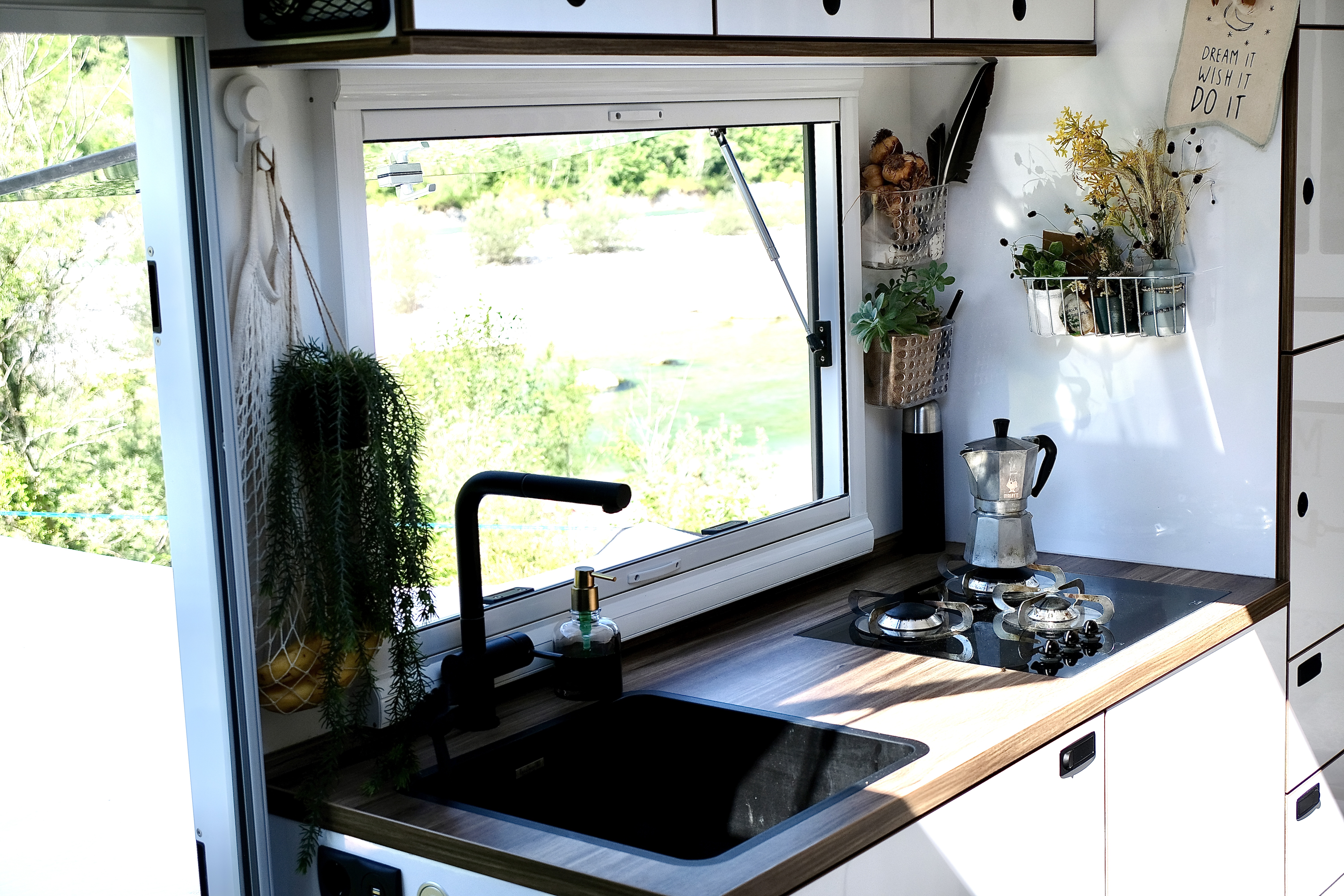
Windows, skylights and service hatches always interrupt the wall structure of an expedition vehicle. For this reason, these components must integrate properly with sandwich panel constructions. Outbound products are designed with attention to:
- Reducing thermal bridges
- Flexible bonding
- Strong integration with sandwich panels
- Durable sealing under changing conditions
The wide flange creates a larger bonding surface, helping distribute stress more evenly. In addition, there is no direct metal connection between the interior and exterior.
This helps reduce condensation and contributes to a more stable interior climate under varying conditions.
With the proven quality of Outbound, these components contribute to a reliable expedition vehicle. Part of your adventure.
Get inspired
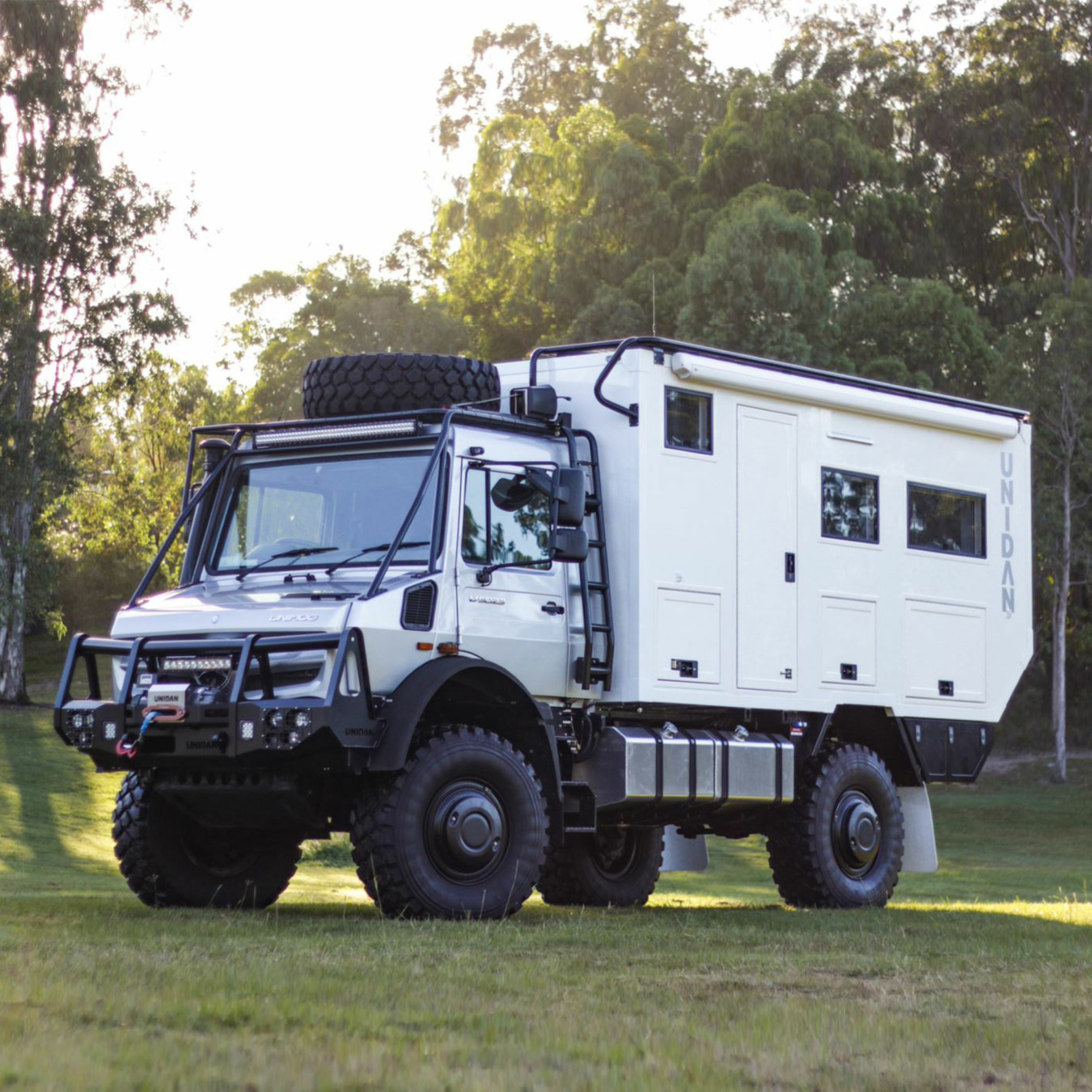
Discover this Mercedes Unimog Expedition vehicle by Unidan Engineering
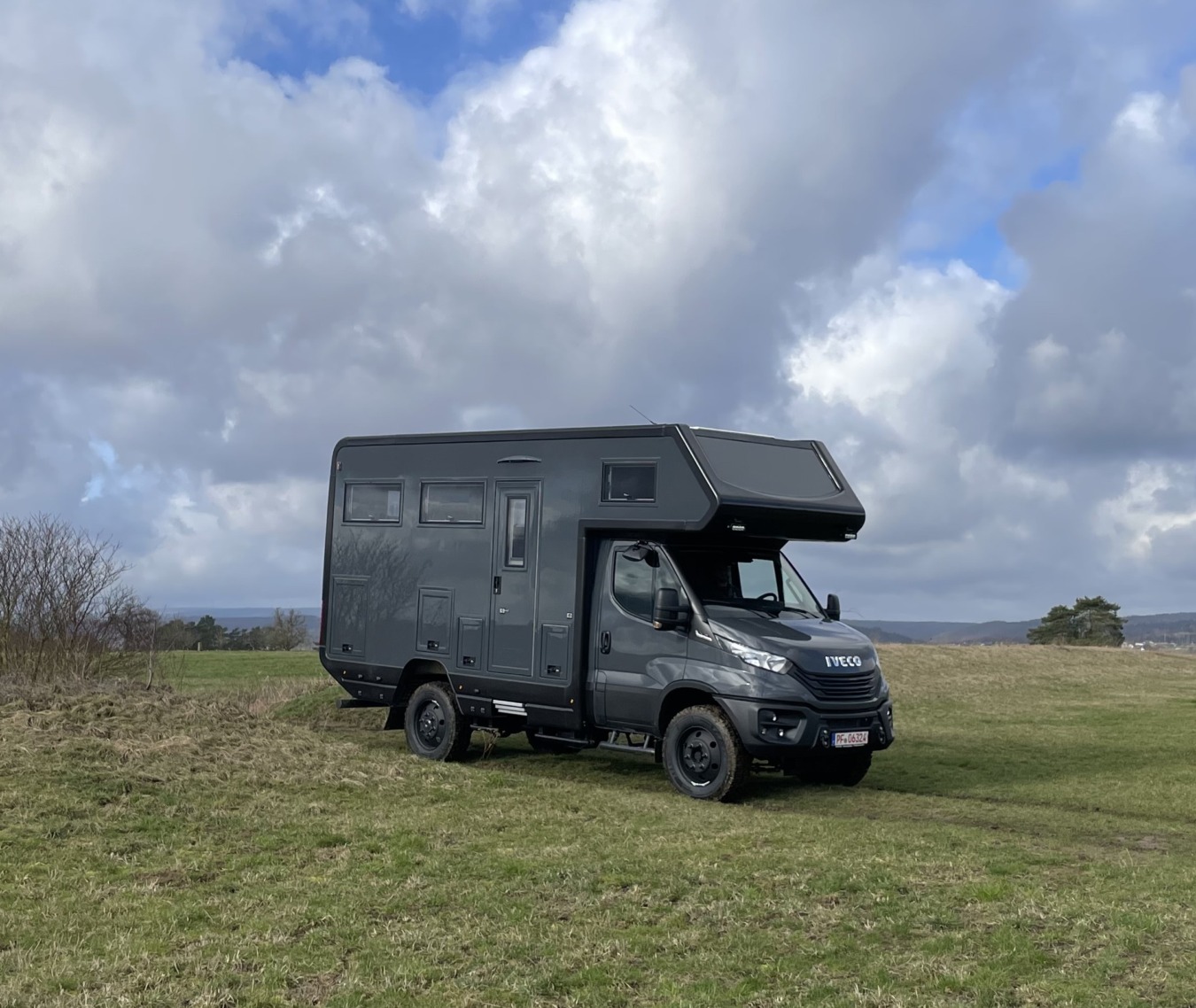
Discover this Iveco Daily 4x4 Expedition Vehicle by Woelcke
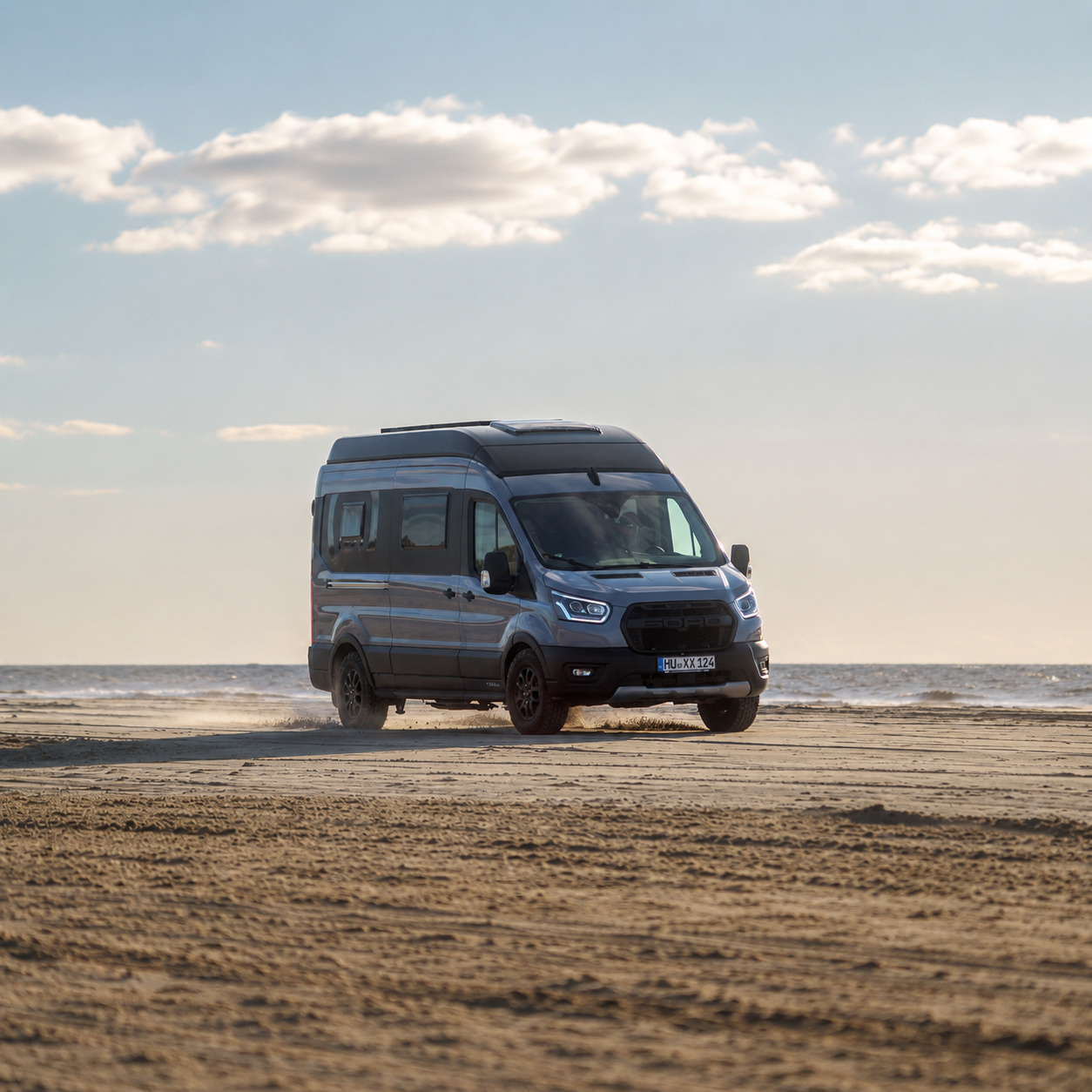
Discover this Ford Transit 4x4 campervan by Pureflexx
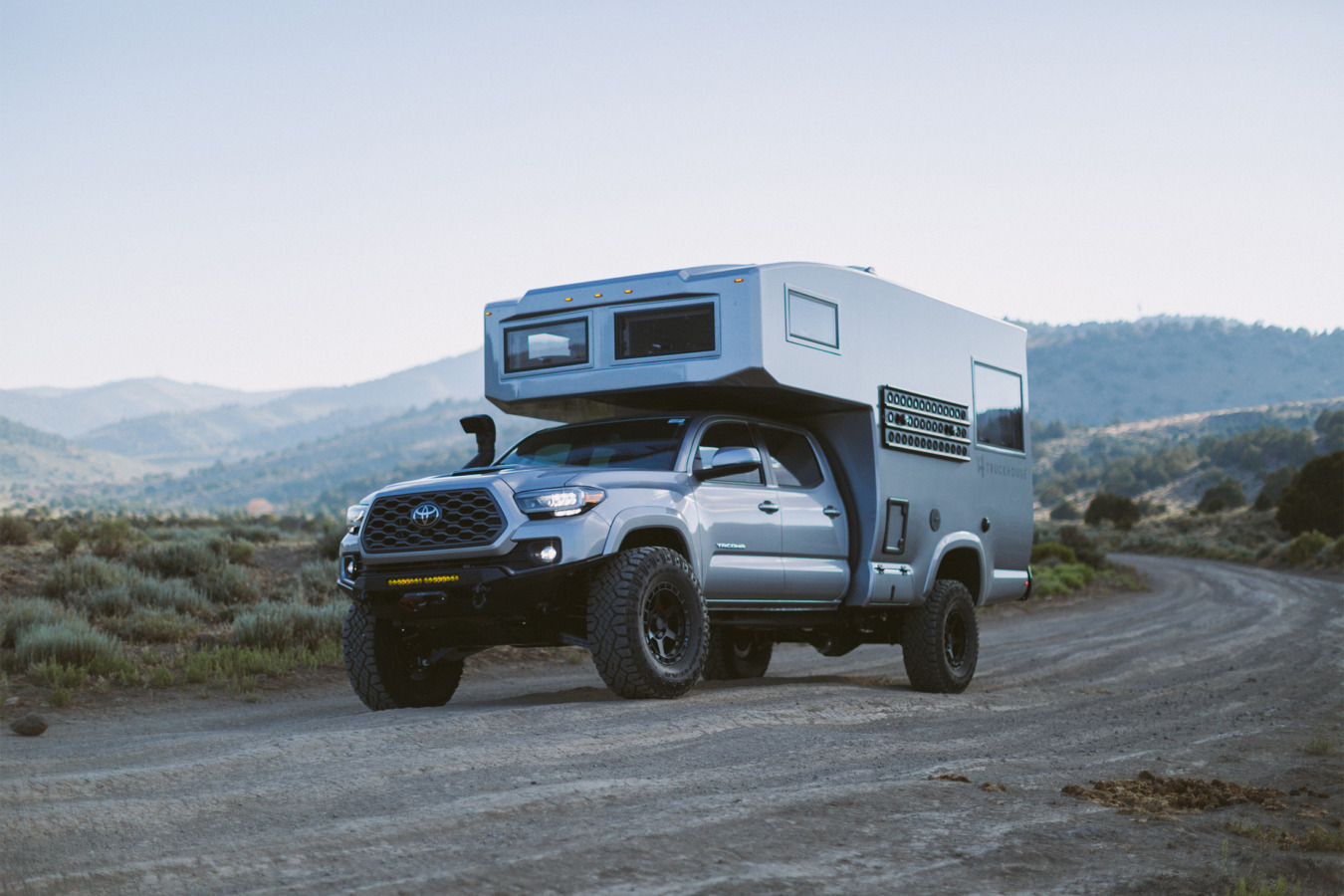
Discover this Toyota Hilux Expedition vehicle by Truckhouse BCT
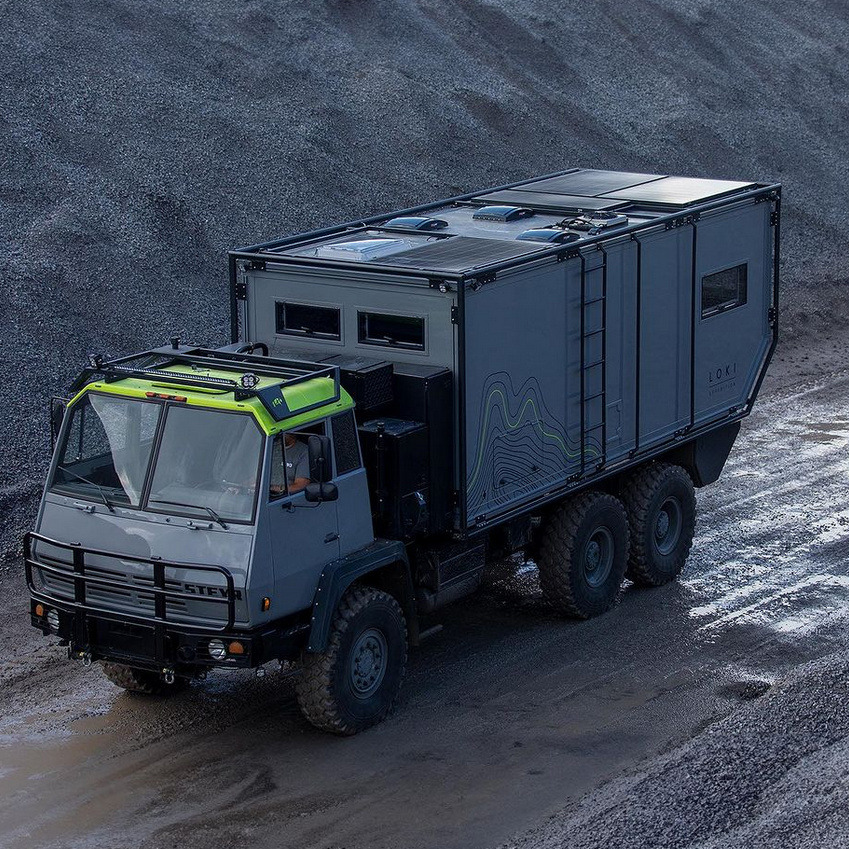
Discover this Expedition vehicle by Loki Expedition
Want to know more?
- Windows for expedition vehicles: Double glazing vs. plastic
- The strength of fiberglass reinforced polyester
- Components for expedition vehicles
- Bonding windows, roof hatches, doors and service hatches for expedition vehicles
- Wall construction of expedition vehicles
- Temperature differences in expedition vehicles