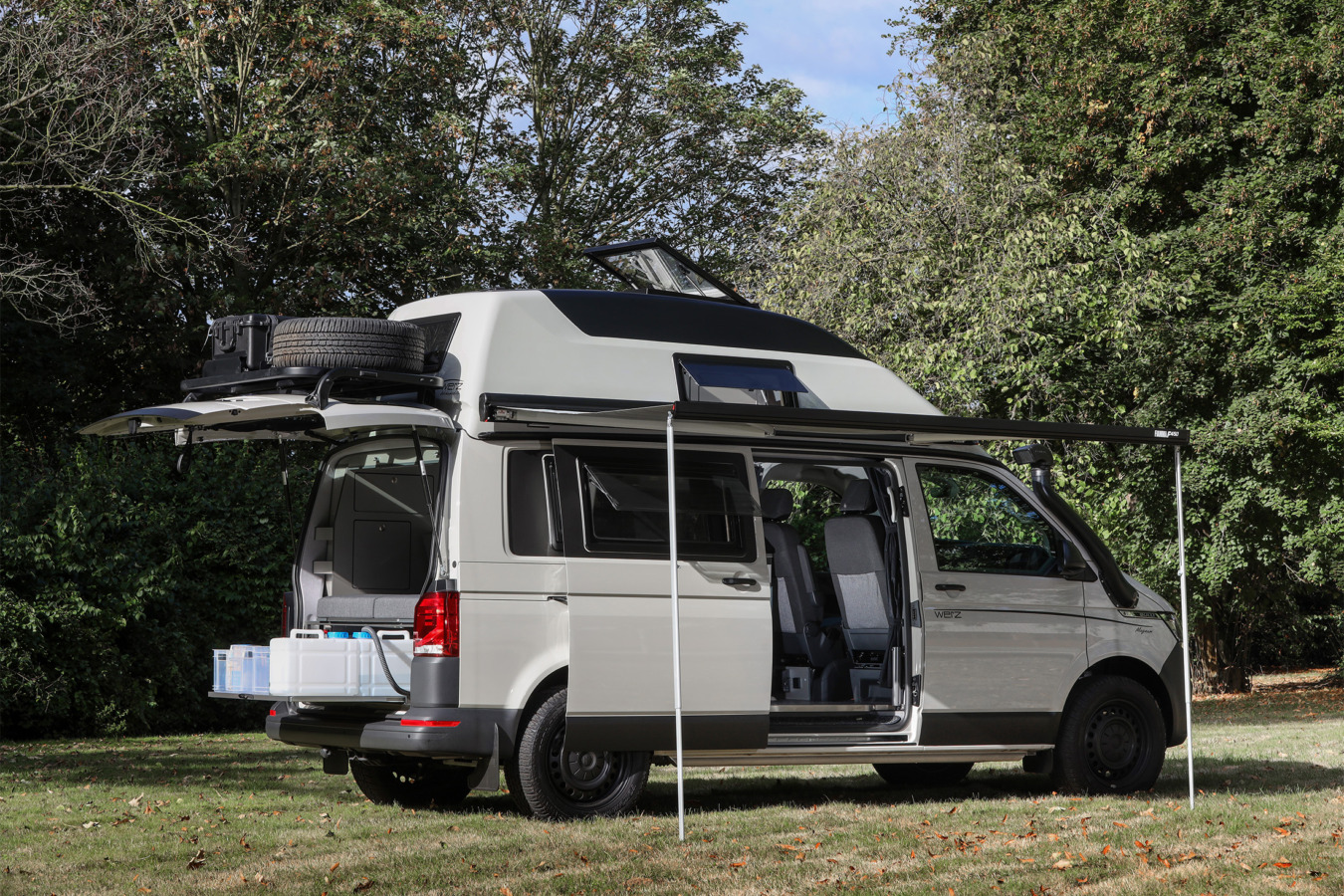
Travelling with a Morelo, Carthago or Phoenix?
Choose light yet sturdy components. These campers are often fully equipped with heavy systems: air conditioning, hydraulic supports, large water tanks. They’re built for comfort and long-distance travel. But all that equipment requires components that are lightweight yet reliable under load. Consider:
- Windows with pressure compensation, ideal for driving in mountainous areas
- Doors and hatches with thermal breaks
- Materials like fiberglass and stainless steel
Our products are built for intensive use and align seamlessly with campers from brands such as:
- Morelo
- Niesmann+Bischoff
- Phoenix
- Carthago
Get inspired
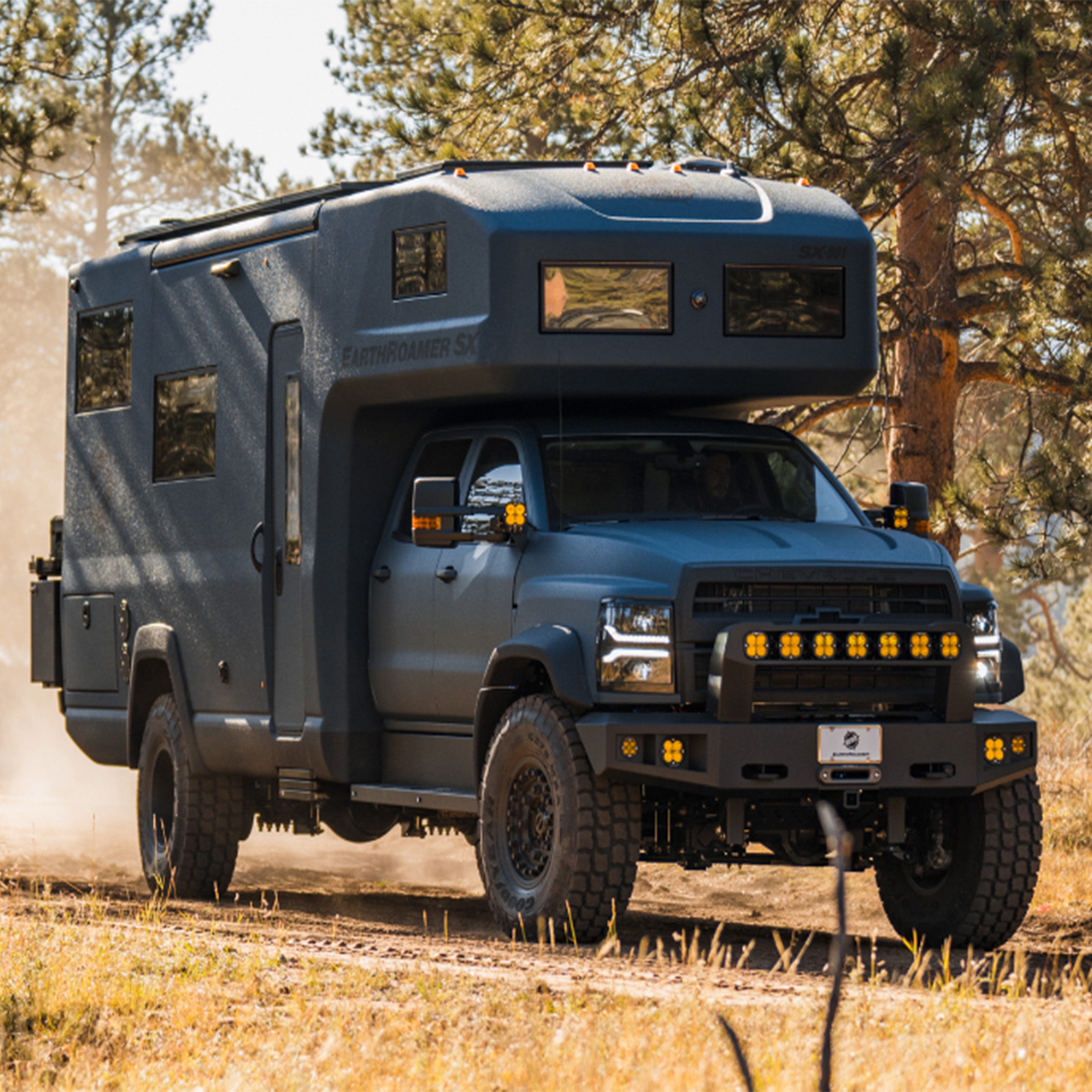
Discover this Chevrolet Silverado 6500HD Expedition vehicle by EarthRoamer
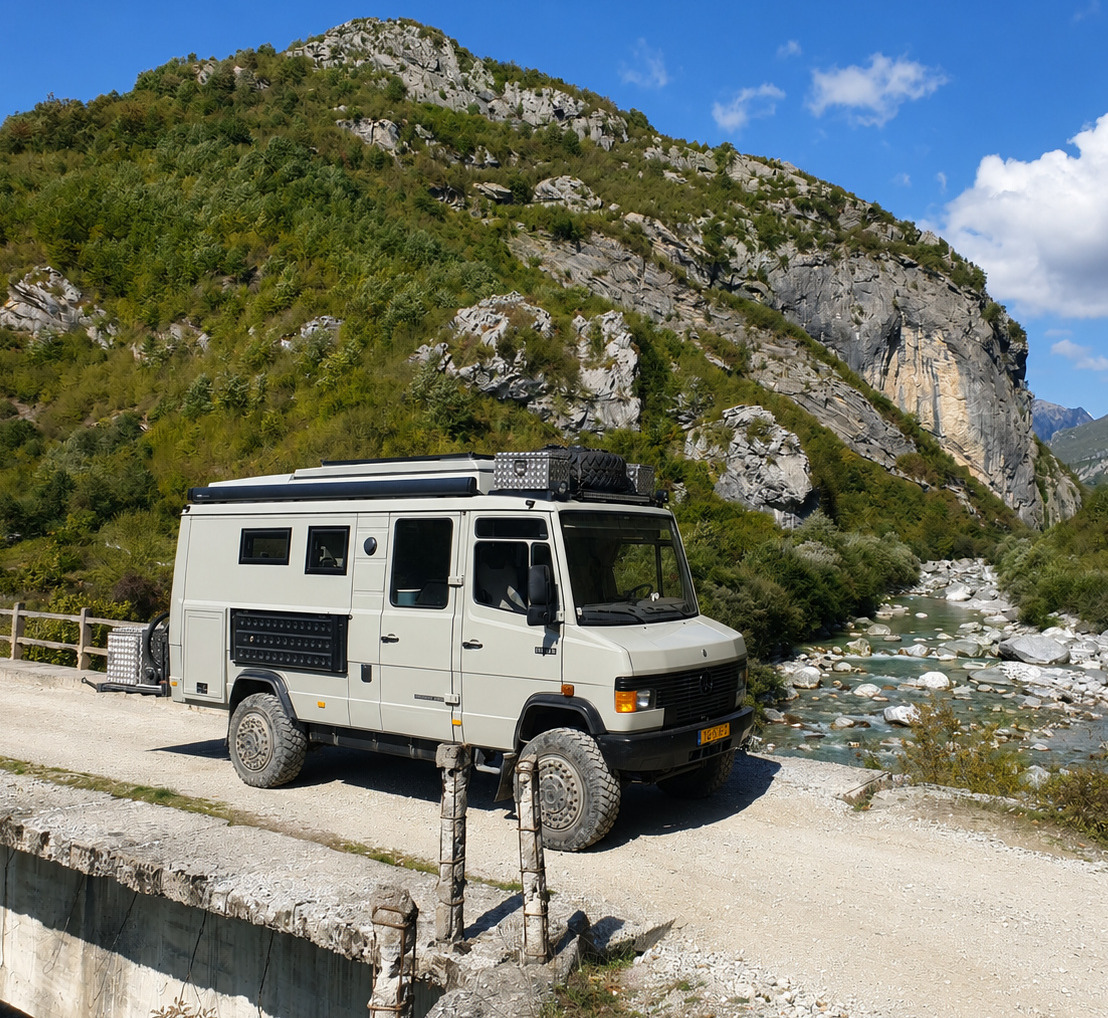
Discover this Mercedes Vario 4×4 Expedition vehicle
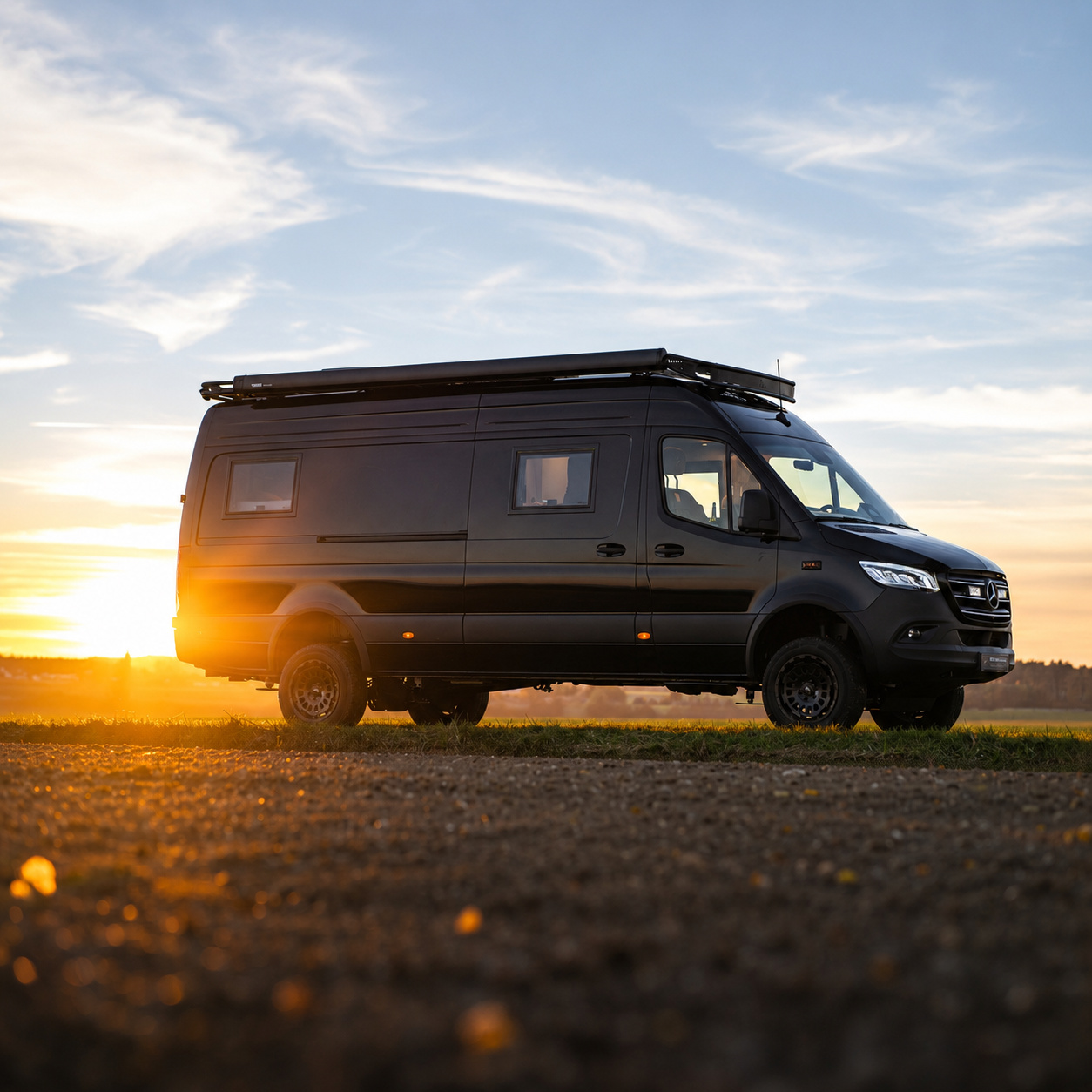
Discover this Mercedes Sprinter 4x4 campervan by Kiwi Van Manufaktur
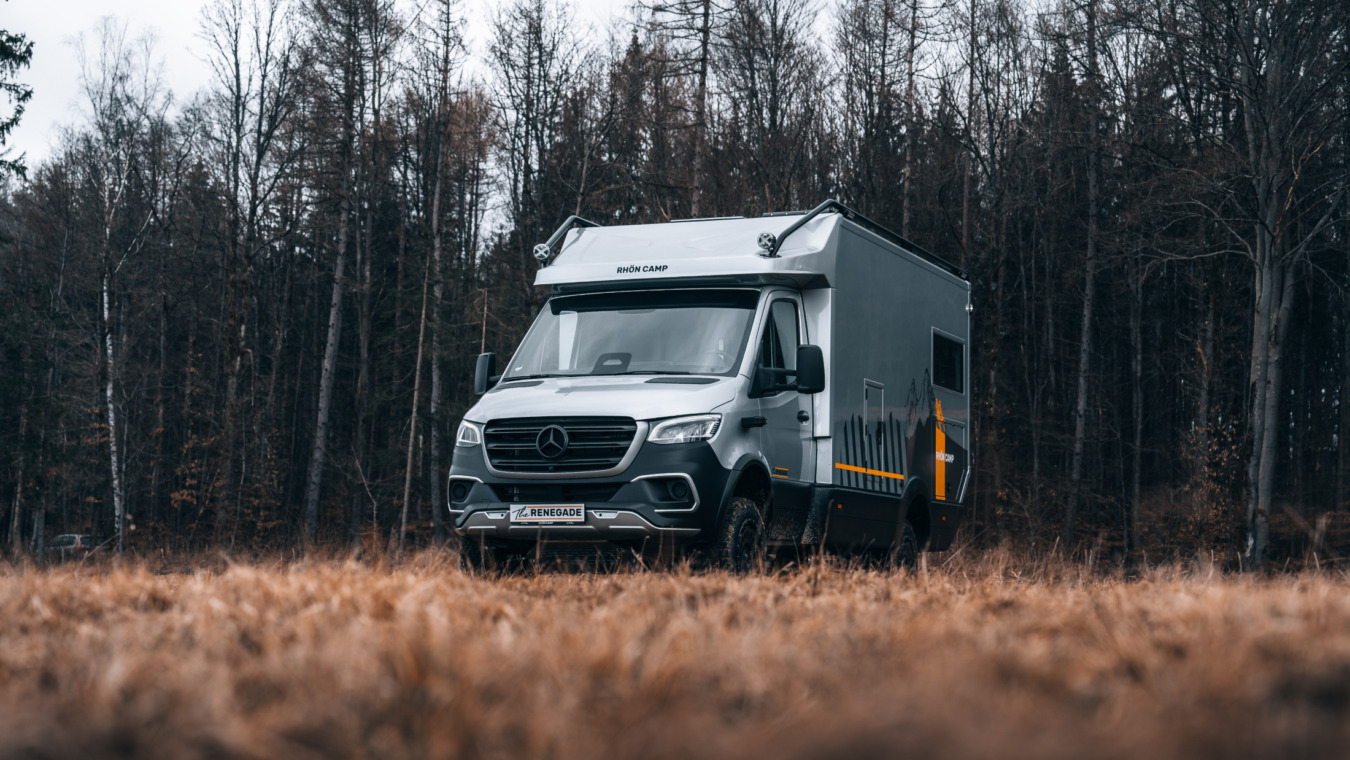
Discover this Mercedes Sprinter 4x4 Expedition vehicle by Röhn Camp
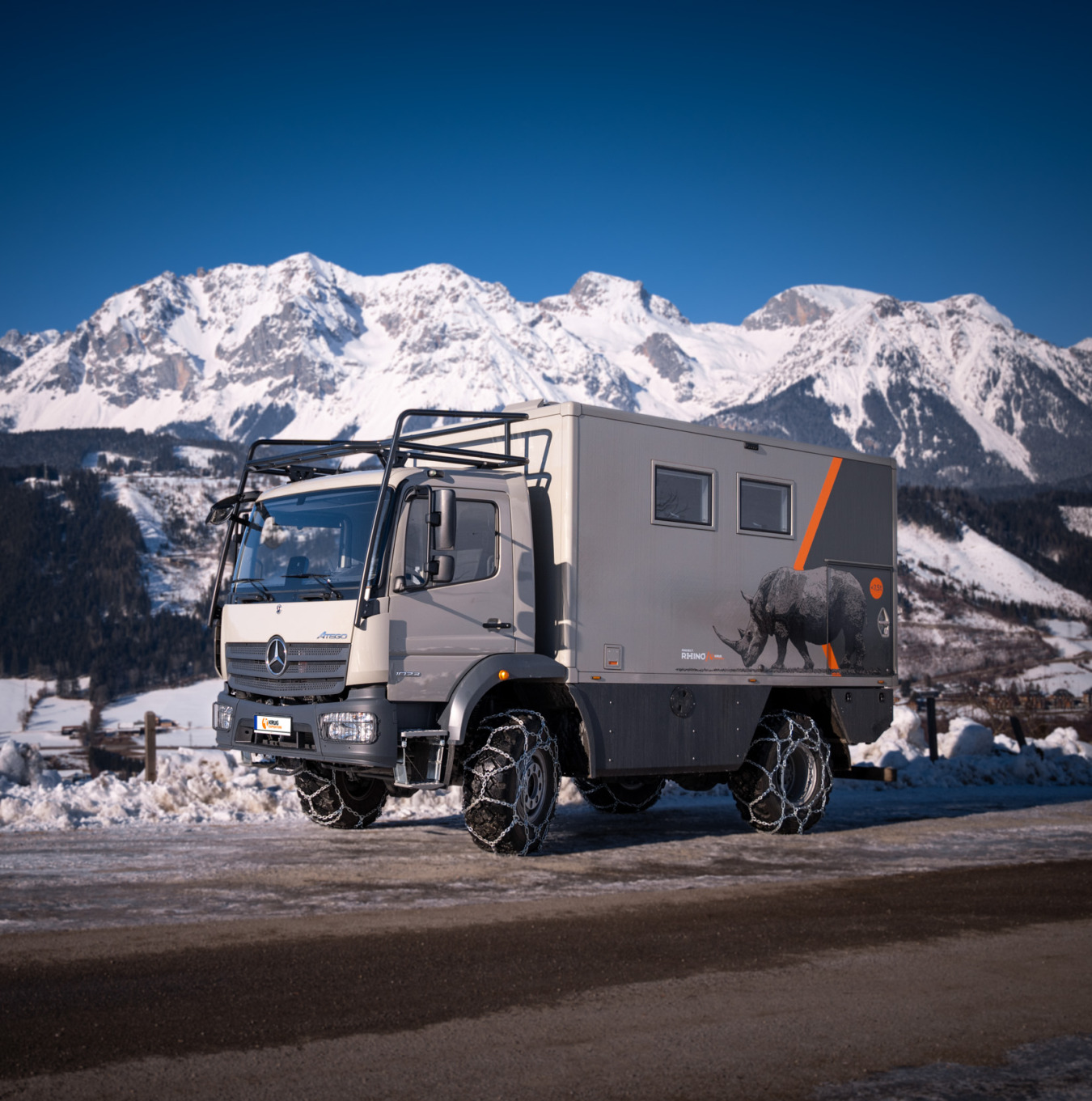
Discover this Mercedes Atego 4x4 Expedition vehicle by Krug Expedition
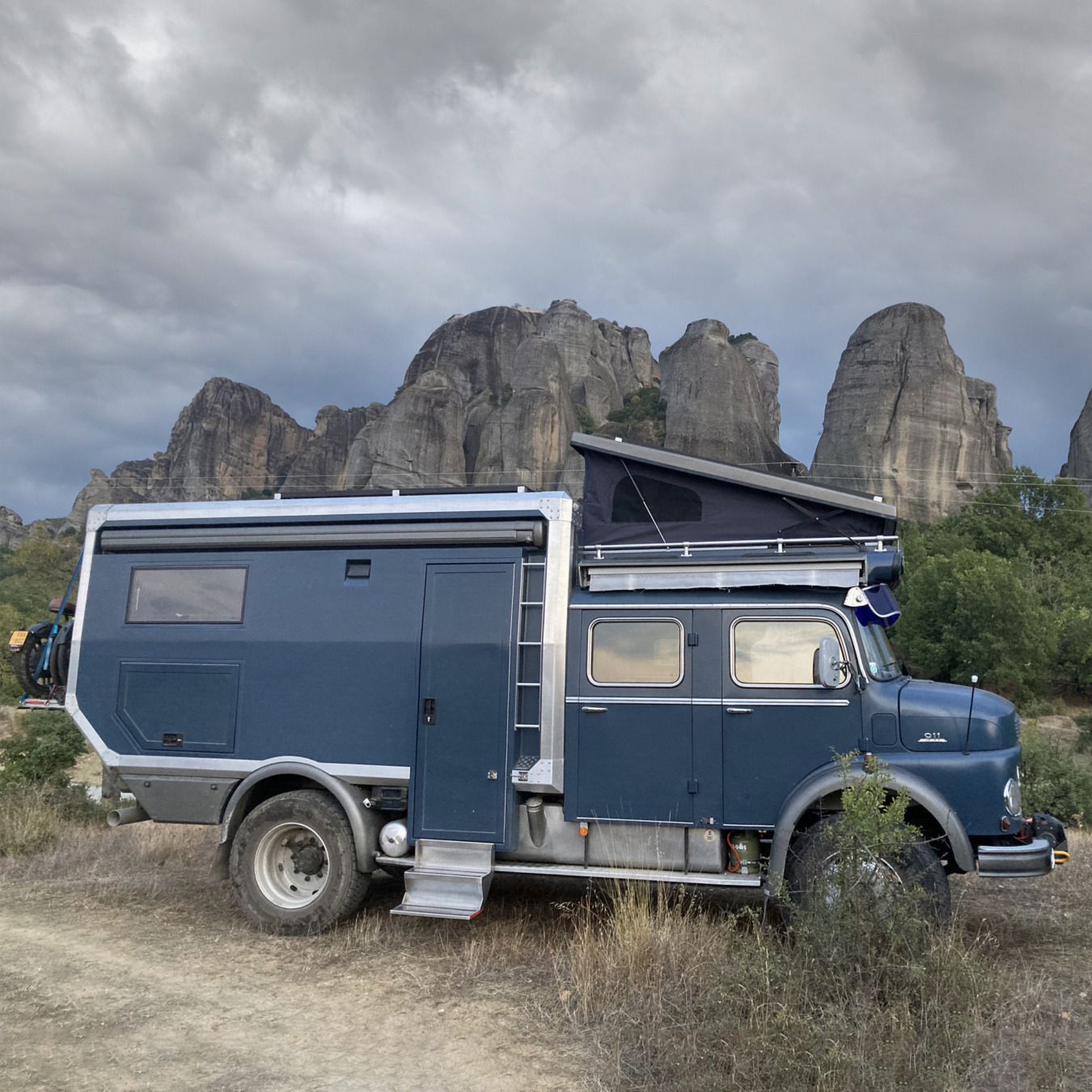
Discover this Mercedes Rundhauber 911 Hybrid expedition vehicle
Converting a Pössl, Globecar or Westfalia Camper?
Pay attention to space and weight. Panel van campers are compact and often serve as an all-in-one living space: cooking, sleeping, and traveling all take place within a few square meters. That places high demands on ventilation, natural light, and insulation—without sacrificing headroom or freedom of movement. Suitable components include:
- Skylight with only 4 cm build-up height
Ideal for vehicles with limited roof space or raised roofs. Thermally broken, well insulated, and fitted with an integrated rain cover for ventilation during showers. - Combination insect and blackout screen for windows and doors
One system for ventilation, shading, and insect protection. Easy one-hand operation, neatly integrated into the frame. - Windows with slim profiles
Especially for sliding doors or thin walls. The slim design saves space while still offering ventilation and daylight. Naturally thermally broken and free of thermal bridges.
Suitable for campers from:
- Globecar
- Pössl
- Westfalia
- La Strada
- Dreamer
- Vantourer
- Karmann
Are you converting your camper?
We’re happy to help you find the products that best suit your camper and your journey. Whether you’re looking for standard components or a custom solution for your specific project, we’re here to think along with you. Feel free to get in touch. We’re ready to support your project from start to finish.

What kind of components do you need for an expedition vehicle?
An expedition vehicle must perform under varying and often harsh conditions. Vibrations on rough roads, extreme temperatures, and exposure to dust and moisture require components that can take a beating. Think of windows that don’t rattle, doors that still close properly after thousands of kilometers, and skylights that function in wind and rain. For 4x4 vehicles, reliability is not a luxury—it’s a necessity. Key considerations:
- Windows and doors with robust locking mechanisms
- Thermal bridge-free construction for stable performance in temperature fluctuations
- Durable seals against dust, sand, and moisture
Our components are built for vehicles that need to perform over the long term—regardless of terrain, climate, or location. They are used globally in expedition trucks from brands such as:
- Bliss Mobil
- Earthroamer
- Twiga Travel Cars
- Woelcke
- Röhn Camp
- Boxmanufaktur
- Krug
And also in self-built 4x4s. With Outbound, you choose components that keep doing their job under tough conditions. No unnecessary complexity—just proven reliability.
Frequently asked questions
Here are answers to common questions about camper builds, materials, and component choices:
Our components are designed for broad compatibility, but fitment can vary depending on the brand and model. We provide advice based on the vehicle type, wall construction, and intended use.
When choosing a camper brand, it is important to look beyond layout and appearance. The differences between brands are often found in build quality, materials, and how the camper performs over time. Key aspects to consider:
- Build quality
How is the camper constructed? Look at the rigidity of the body, the quality of joints, and overall finish. - Insulation and comfort
Check how well the camper is insulated against heat and cold. This is especially important for year-round use. - Weight and payload
Some campers are close to their maximum weight limit when empty. Make sure there is enough payload left for your equipment. - Layout and usability
Choose a layout that fits your way of traveling. Think about sleeping, cooking, and storage. - Components and materials
Pay attention to the quality of windows, doors, and installations. These parts determine long-term durability. - Service and availability
Consider how easy it is to get maintenance, parts, and support for the brand.
A well-chosen camper is not only comfortable, but also reliable over time. Especially when traveling longer distances, build quality and material choices make the difference.
The fit of a window does not primarily depend on the camper brand, but on the wall construction and dimensions of the opening. Important factors include wall thickness, panel structure, and how the window is mounted. For example, a window for a sandwich panel requires a different installation approach than one for a standard van body.
At Outbound, we assess compatibility based on:
- Wall thickness and build-up
- Type of panel or body construction
- Intended use of the vehicle
By looking at these technical aspects, we can advise which window fits your application and how it should be installed for a reliable result.
The best camper brand depends on how you travel and how much comfort you need. In the European market, there are several well-established brands known for reliable camper vans and motorhomes. Well-known camper van brands include:
- Hymer
- Pössl
- Globecar
- Adria (Twin series)
- Knaus (Boxstar)
- Weinsberg
These brands focus on compact campers built on vans like the Fiat Ducato or Mercedes Sprinter. They are practical, easy to drive, and suitable for flexible travel.
Popular motorhome brands include:
- Hymer
- Carthago
- Dethleffs
- Bürstner
- Adria
- Knaus
These offer more living space and comfort, with fixed layouts and better insulation. They are often used for longer trips and extended stays.
When comparing camper brands, it is important to look beyond layout and design. Pay attention to build quality, insulation, and how components are integrated. This determines how the camper performs over time and under different conditions.